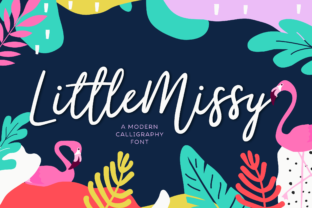
Little Missy: A Versatile Handwritten Font for Creative Projects
Little Missy is a charming and elegant handwritten font that brings a touch of personality and warmth to any design. Designed with a soft, flowing style, it captures the essence of cursive writing while maintaining readability. This font is ideal for those looking to add a unique, handcrafted feel to their projects without sacrificing clarity.
What Makes Little Missy Stand Out?
Little Missy is more than just a decorative font—it’s a versatile tool that can be used in a variety of contexts. Its delicate strokes and natural flow make it visually appealing, yet it remains legible even at smaller sizes. The font's character set includes uppercase and lowercase letters, numbers, and basic punctuation, making it suitable for both digital and print media.
One of the key strengths of Little Missy is its adaptability. Whether you're designing a greeting card, creating social media graphics, or crafting a website header, this font can enhance your message with a personal touch. Its aesthetic is reminiscent of handwritten notes, which makes it particularly effective for invitations, announcements, and other communication materials.
When to Consider Using Little Missy
Little Missy shines in situations where a friendly and approachable tone is needed. It works exceptionally well for:
- Wedding invitations and stationery
- Event posters and flyers
- Social media content and branding
- Personalized gifts and crafts
- Website headers and call-to-action buttons
In these scenarios, the font’s warm and inviting nature helps create an emotional connection with the audience. It adds a sense of authenticity and individuality, which can be especially valuable in marketing and creative industries.
Considerations and Tradeoffs
While Little Missy offers many benefits, it’s important to consider its limitations. As a handwritten font, it may not be the best choice for long-form text or technical documents where clarity and consistency are paramount. The stylized appearance can sometimes make it difficult to read in certain contexts, particularly when used in large blocks of text.
Additionally, because of its decorative nature, Little Missy may not be appropriate for all audiences or industries. For example, it might not be the most professional choice for corporate branding or formal presentations. However, this same characteristic can be an advantage in creative fields such as graphic design, fashion, and lifestyle content.
Alternatives to Consider
If Little Missy doesn’t quite fit your project, there are several alternatives that offer similar aesthetics or better performance in specific use cases. Some popular options include:
- Courier New – a monospace font ideal for coding and typewriter-style designs
- Baskerville – a serif font with a classic and elegant look
- Comic Sans MS – a playful font often used in casual or child-friendly designs
- Quicksand – a modern sans-serif font that balances readability with a contemporary feel
Each of these fonts has its own strengths and weaknesses, so it’s important to evaluate them based on your specific needs. For instance, if you require a font that is both readable and stylish for a wide range of applications, Little Missy may still be the best option, but it’s worth exploring other choices if you need greater versatility or professionalism.
How to Make the Best Decision
Choosing the right font ultimately depends on your goals and the context in which it will be used. When evaluating Little Missy, ask yourself the following questions:
- Does the font align with the tone and purpose of my project?
- Will it be easily readable in the intended format and size?
- Is it appropriate for the target audience and industry?
- Are there any potential drawbacks or limitations I should be aware of?
By carefully considering these factors, you can determine whether Little Missy is the right choice for your needs or if another font would better suit your project.
In conclusion, Little Missy is a delightful and practical font that can elevate your creative work with its charming, handwritten style. While it may not be suitable for every situation, it offers a unique blend of beauty and functionality that makes it a valuable addition to any designer’s toolkit. Whether you’re working on a personal project or a professional design, taking the time to evaluate your options will help you make the most informed decision possible.